A swim feels great in July. By October, you might rather sit outside in warm water and watch the leaves fall. A hot tub gives you a reason to head back out after the pool cover goes on.
A pool with hot tub access gives you room to swim and a warm place to soak when the air cools. A built-in gunite spa can match your pool’s shape and finishes, while a standalone hot tub has its own equipment. In Western New York, decide early if you want to soak after the pool closes. That choice affects the plumbing, covers, and where the spa belongs.
Hot tub benefits you’ll notice throughout the year
More evenings outside
A hot tub makes the patio useful on cool spring mornings and fall evenings when the pool sees less action. A spa designed for winter use extends that routine into the colder months. If you picture yourself soaking after the first snowfall, bring that up before the pool plans are drawn.
A place to slow down
Warm water, a comfortable bench, and jets give you somewhere to sit after a swim, a long day on your feet, or a round of shoveling. In a custom spa, think about who will use it most. Different seat heights give people of different heights a choice about how deep they sit. Leave room to step in without asking everyone to move.
More room when friends come over
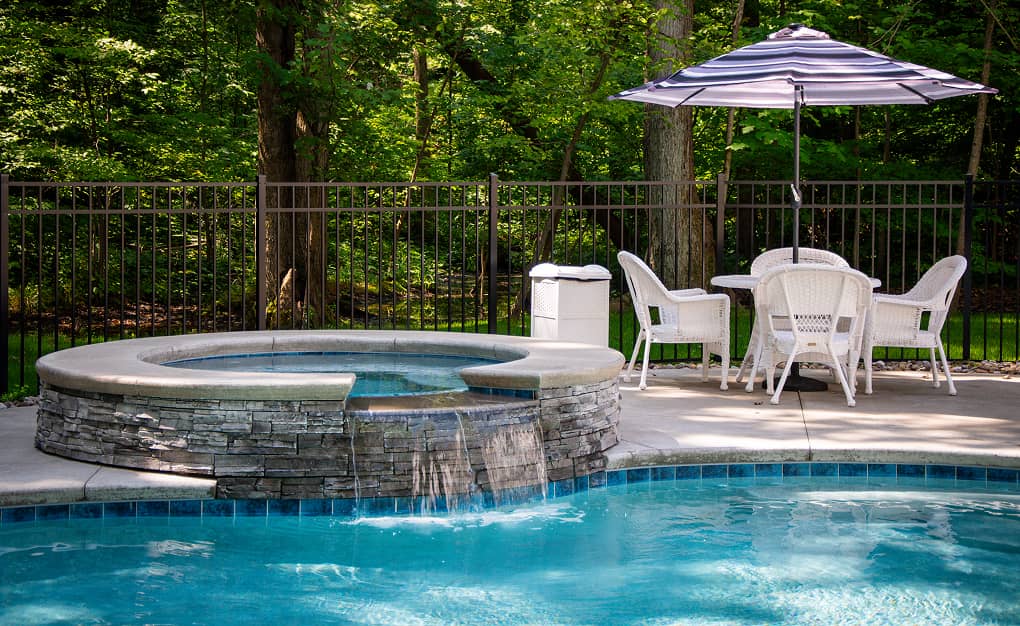
A spa gives guests a second place to gather while swimmers use the pool. If you host often, think about where people will leave towels and walk between the house, pool, and spa. A raised spa can become a focal point from the patio, especially if you choose a stone finish or a spillover that’s visible from your seating area.
Two ways to design a hot tub pool combo
A built-in spa ties into the pool design. A self-contained tub gives you more freedom to place it closer to the house. Compare the layout and winter plans for both before you commit.
| Setup | Best fit | What to plan for |
|---|---|---|
| Built-in gunite spa | A new build or major renovation with coordinated finishes or a spillover. | Plumbing, equipment, spa cover, and winter operation. |
| Standalone hot tub | An existing pool or a spot closer to the back door. | A suitable base, electrical service, and access for the cover and equipment. |
At Illuminated Manor, we paired a rectangular gunite pool with a raised spa, a stone veneer exterior, and phone-controlled lighting. It’s an example of how the spa, pool, and patio can be planned together.
Plan for a Buffalo winter before you build
An attached spa can share a pump, filter, or heater with the pool. Some systems use spa mode to send water through the spa while you soak. Ask your builder to confirm which lines can be drained at closing, which equipment needs to stay in use, and how the spa will be covered when the pool is closed.
If winter soaking is a priority, a standalone hot tub can simplify the layout. It runs independently of the pool, so you can place it near a door you use all year. Walk that route on a cold night and picture where you’ll clear snow, where water will drain, and how much space you’ll need to lift the cover. Ask your installer for a plan for outages during a freeze. Pool Mart’s winter spa guide covers cold-weather care and cover upkeep.
What changes when you add a spa to an existing pool
Start with the deck, equipment pad, and pool cover. A built-in addition may involve opening part of the deck for plumbing, changing the equipment, or reworking how the pool cover fits. Those details matter if you want the spa to look like part of the original build.
A standalone tub can leave the pool plumbing in place. Check that there’s room for delivery, a base that meets the tub manufacturer’s requirements, and access to the equipment after installation. If you’re already replacing the patio or updating the pool, our pool renovation team can help you assess how a spa might fit the project.
Budget for upkeep as well as installation
Ask for two estimates. One should cover the spa and the work needed to install it. The other should give you a sense of what it takes to run and maintain the setup you’re considering.
- For installation, ask about plumbing or electrical work, changes to the patio, and the spa cover.
- For regular use, budget for heating, filtration, water testing, and filter and cover care.
- For winter operation, ask how your cover and equipment will handle the cold and who to call if the system stops running.
A standalone tub has its own water to test and balance. Review the CDC’s home pool and hot tub water-care guide for testing guidance. If you plan to keep the spa running after pool closing, bring that up when arranging seasonal pool service.
If you’re starting from scratch, our custom gunite pool design team can plan the spa, patio, and pool together. Tell us about your backyard project and how you’d like to use the spa through the year.
Frequently Asked Questions
Does adding a hot tub to a pool increase home value?
A well-kept spa may appeal to some buyers. Any effect on appraised value depends on the local market, the condition of the property, and recent sales of similar homes. Fannie Mae explains what goes into a home appraisal.
Can you use an attached hot tub when the pool is closed?
Yes, if the system is designed so the spa can operate while the pool is winterized. Have your builder confirm how the plumbing, equipment, and covers will work after closing.
Can you add a hot tub to an existing inground pool?
Yes. A standalone tub can sit nearby if there’s space for its base, electrical service, and access. For a built-in spa, ask a pool builder to look at the shell, patio, cover, and equipment before pricing the work.
What’s the difference between a hot tub and a swim spa?
A hot tub, often called a spa, is designed for seated soaking. A swim spa is longer and uses jets to create a current you can swim against.