Every homeowner planning a new pool eventually hits the same decision: concrete or pavers around the water. Both look great in photos. Both hold up fine for a few years. The real differences show up later, after a few WNY winters, a few freeze-thaw cycles, and a few seasons of pool chemicals splashing onto the deck.
Here’s the direct answer to the concrete patio vs pavers question: concrete costs less upfront and installs faster, but pavers hold up better long-term and are far easier to repair when something cracks or shifts. Which one wins depends on your budget, how long you plan to stay in the house, and how much you care about maintenance five years from now.
Concrete Patio vs. Pavers: Quick Comparison
| Stamped Concrete | Pavers | |
|---|---|---|
| Cost per sq ft | $12-$18 | $16-$24 |
| Cracking risk | Will crack eventually | Rarely cracks; flexes with ground movement |
| Repairs | Full slab replacement in most cases | Swap the single damaged paver |
| Slip resistance | Needs an anti-skid additive | Textured surface, naturally grippy |
| Heat underfoot | Gets hot in direct sun | Varies by material; lighter colors stay cooler |
| Maintenance | Reseal every 2-3 years | Refresh polymeric sand every couple years |
| Installation time | Faster, poured and cured | Slower, laid piece by piece |
Stamped Concrete Pool Patio: What It Actually Looks Like
A stamped concrete pool patio is poured concrete pressed with a textured mold before it cures, then colored to mimic stone, slate, or brick. Done well, it’s convincing. Done poorly, it looks exactly like what it is: concrete pretending to be something else.
The upside is real. Stamped concrete costs less than pavers, goes down fast, and gives you a seamless surface with no joints for weeds or debris to work into. If you want a modern, minimalist look around the pool, concrete does that better than pavers do.
The downside is also real, and it’s the same complaint you’ll find repeated across pool forums and homeowner threads: concrete cracks. It’s not a matter of if, it’s when. Contractors place control joints to steer the cracking somewhere less visible, but concrete doesn’t always cooperate. And once it cracks near a pool, that crack is impossible to unsee every time you walk out to swim.
Add in WNY’s freeze-thaw cycles specifically, and the crack risk goes up. Water gets into hairline fractures, freezes, expands, and makes the crack worse. It’s the same reason winterizing your pool properly matters so much here the same freeze pressure that can damage plumbing will work on your concrete deck too.
Paver Pool Deck: What It Actually Looks Like
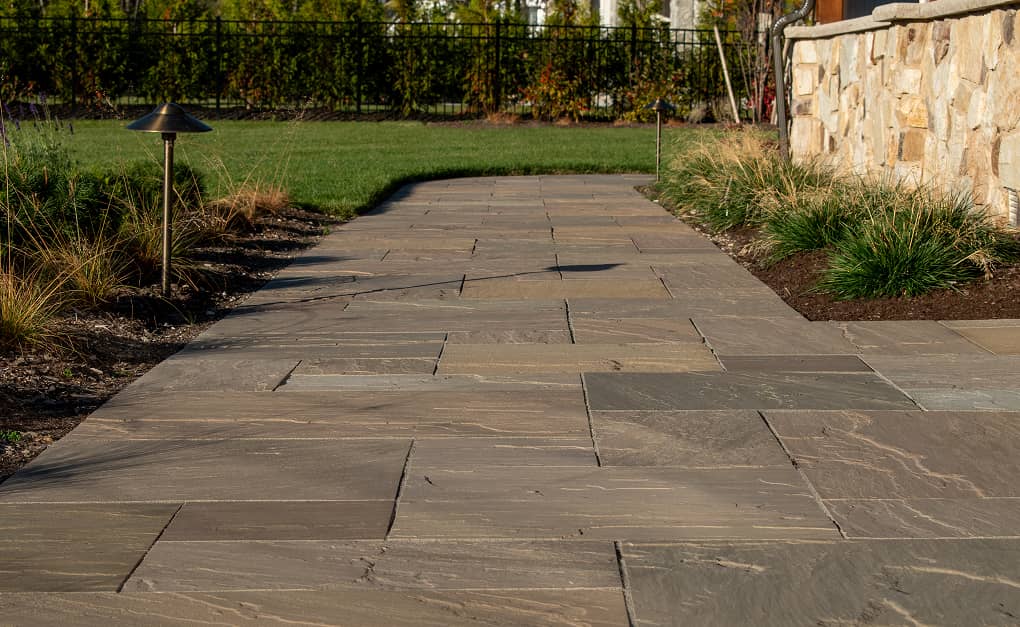
A paver pool deck uses individual units, brick, concrete, or natural stone, laid piece by piece over a compacted base and locked together with sand in the joints. Because the deck isn’t one continuous slab, it flexes instead of cracking when the ground shifts underneath it.
That flexibility is the single biggest reason pavers tend to win the long-term comparison. If a paver gets stained, chipped, or heaves from frost, you pull that one piece and replace it. Nobody has to look at a patched, mismatched section of concrete for the next ten years.
Pavers also drain better. Water moves down through the joints instead of pooling on the surface, which cuts down on the slick spots that show up on smooth concrete near a pool. That’s a real safety consideration when you’ve got kids running around wet.
The tradeoffs are cost and upkeep. Pavers run more per square foot, take longer to install since each piece goes down by hand, and the joint sand needs to be topped off every couple of years or weeds start creeping through. Homeowners on pool forums mention this constantly, sand washing out, needing to be re-applied, occasionally ending up in the pool itself if it’s not sealed properly.
Cost of Concrete Patio vs. Pavers, By the Numbers
Here’s where the two materials actually land price-wise, based on typical ranges:
- Stamped concrete: $12-$18 per square foot
- Standard pavers: $16-$24 per square foot
- Natural stone pavers (travertine, flagstone): can run higher, often $20-$30+ depending on the stone
Concrete wins on sticker price. But the real cost comparison isn’t the installation invoice, it’s the invoice five or ten years out. Concrete needs resealing every 2-3 years, and if it cracks badly, you’re looking at a full slab replacement, not a patch job. Pavers cost more going in but the repair math is smaller and more contained over time. If you’re staying in the house long-term, that difference adds up.
Our cost expectations page breaks down what actually drives pricing on a custom pool project, patios included, so you can see where this fits into a full build budget.
Which Should You Actually Choose?
If budget is the deciding factor and you’re okay with the deck needing attention down the road, concrete is a fine choice. It looks good on day one, costs less, and a lot of homeowners never have a serious problem with it.
If you want something that ages well with minimal drama, pavers are the better bet. You pay more upfront, but you’re not staring down a full deck replacement in ten years because one bad freeze cracked the whole slab.
There’s also a middle path worth mentioning: some homeowners mix both, concrete in the main deck area, pavers for coping or high-wear zones near the pool edge. It’s not an either-or in every case.
Chameleon Pools runs its own in-house concrete division, which means we handle this decision with you directly instead of subcontracting it out. Whether you land on stamped concrete or a full paver deck, it’s built and installed by the same team building your pool. Ready to talk through options for your project? Request a free quote and we’ll walk you through what makes sense for your yard.
FAQs
Does stamped concrete or pavers hold up better in cold climates?
Pavers generally do better in freeze-thaw regions like Western New York. Because they’re individual units, they flex with ground movement instead of cracking under pressure the way a solid concrete slab does.
Can you repair a small area of a concrete pool patio without redoing the whole thing?
Sometimes, but it’s rarely seamless. Patched concrete usually shows a visible seam or slight color mismatch, especially with stamped or colored finishes. Pavers don’t have this problem since you’re swapping one piece for an identical one.
Do pavers get too hot to walk on around a pool?
It depends on the color and material. Lighter-colored pavers stay noticeably cooler than dark concrete or dark pavers in direct sun. If heat underfoot is a concern, ask about lighter paver options during your design consultation.
Is stamped concrete cheaper than pavers long-term?
Not always. Concrete costs less to install, but resealing every 2-3 years plus the risk of a full slab replacement if it cracks badly can close the cost gap over a 10-15 year span.